Both of my subject areas English and History have a large emphasis on literacy. At the beginning of the semester I wondered what I would learn that I had not learned before. Now that the semester is drawing to a close I have discovered that I have gained not only a refresher on the types of literacy I need to be incorporating into my classroom but specific ways that I can do so.
The greatest lesson that I have learned this semester is that literacy is not limited to the English classroom. There is literacy in math, science, art, music, and health. There are also ways that I can incorporate math or science literacy into the English classroom. I especially enjoyed the lesson on writing instruction where we were assigned to build our own bridges and then write a proposal based on that experience. I feel that incorporating a lesson like this would help students see that reading and writing are important no matter what your interests are more than just telling them or having them talk to someone in the profession. I learned so much from students in other disciplines and their experiences in literacy. I hope that I will be able to develop lessons and projects with teachers outside of my discipline to encourage literacy.
To encourage students to pursue literacy in their interests I would provide students with a classroom library stocked with more than just English or History books. I really enjoyed the day we passed around the books from all the different subject areas. There were many that caught my eye as books I wanted to read or could even incorporate into lessons. I feel that to reach this goal requires two types of knowledge. First, a knowledge of a variety of books, and second, a knowledge of students and their interests. It is more effective to know a students is interested in art and to recommend a book about Van Gogh than it is to tell students to go find books that interest them. When students see that we value many different types of learning they will be more likely to want to learn.
This class opened my eyes to the many diverse ways we can help students to develop literacy.
Saturday, April 27, 2013

Monday, April 22, 2013
Historical Fiction Bookclub
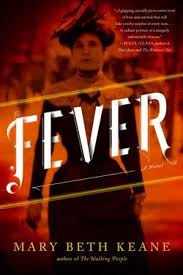
For my self-selected project I chose to work with Marti and Hayley to form a book club to read two historical fiction novels. We read When Hitler Stole Pink Rabbit by Judith Kerr and Fever by Mary Beth Keane.

When Hitler Stole Pink Rabbit is based on Kerr's experience escaping from Germany with her family and then living in France and finally England. For the most part we liked this book especially since it was based on a young girl's experiences which students could relate to. However, the book is fairly simple in a number of ways. The first being that it is written at about a 5th or 6th grade reading level taking it almost out of the realm of secondary education. The second being that the author idealized many of the situations that happened to her. We did find many uses for it, however, especially for ESL students or struggling readers. It also has many themes that could be used in both an English and History class. These themes include new places and identities, various perspectives, censorship, and the effect of war on art. We decided that this book would be a good jumping off point to study a variety of perspectives especially during and after the war since the book ends with the beginning of the war. We also thought it would be fun to do an activity where students write postcards based on the book or other historical events during the same time period since the main character's uncle wrote post cards.
Fever is based on the life of Mary Mallon aka. Typhoid Mary. She was a cook during the late 19th and early 20th century and saw a lot of death during this time. A sanitary engineer, Dr. Soper, first developed the concept of healthy carriers, people who are not ill but spread disease, which he applied to Mary. This led to her capture and exile on North Brother Island for three years. We liked this book as well as it did a good job of humanizing the life of Mary Mallon as well as other events during the same time period such as the Triangle Shirtwaist Factory Fire. We decided that this would be a good book for cross-curricular activities in English, History, and Science. It would be interesting to have students research how the views of disease have changed over the years and to see how disease is viewed in the present day. We also decided it would be interesting to look at gender and what role it plays in society. In the book, a male healthy carrier was discovered but was not quarantined because he was the head of the household. Other interesting themes in the book is immigration and how they were viewed in society as well as the reality of city life. To build upon this book we decided it would be good to read Mary's accounts along with other primary source documents to enrich the view point presented in the book.
We decided that to encourage reading for pleasure we would include both of these books, along with others, in our own classroom libraries. These books taught me that reading for pleasure in history can be both fun and informative. I learned a lot about Typhoid Mary and the conditions people lived in during the turn of the century. It can also play to students' interests which can help them engage in both an English and history classroom.
Along with a classroom library I would incorporate book clubs or book reviews into my classroom. Students would be assigned to find a historical fiction book that interests them which would either be read as a group or individually. Students would then discuss their book with a group or write a book review. This book review would summarize the book and discuss what the student like or disliked along with their recommendation. It would be fun to create a top ten list of books to read.
When Hitler Stole Pink Rabbit is based on Kerr's experience escaping from Germany with her family and then living in France and finally England. For the most part we liked this book especially since it was based on a young girl's experiences which students could relate to. However, the book is fairly simple in a number of ways. The first being that it is written at about a 5th or 6th grade reading level taking it almost out of the realm of secondary education. The second being that the author idealized many of the situations that happened to her. We did find many uses for it, however, especially for ESL students or struggling readers. It also has many themes that could be used in both an English and History class. These themes include new places and identities, various perspectives, censorship, and the effect of war on art. We decided that this book would be a good jumping off point to study a variety of perspectives especially during and after the war since the book ends with the beginning of the war. We also thought it would be fun to do an activity where students write postcards based on the book or other historical events during the same time period since the main character's uncle wrote post cards.
Fever is based on the life of Mary Mallon aka. Typhoid Mary. She was a cook during the late 19th and early 20th century and saw a lot of death during this time. A sanitary engineer, Dr. Soper, first developed the concept of healthy carriers, people who are not ill but spread disease, which he applied to Mary. This led to her capture and exile on North Brother Island for three years. We liked this book as well as it did a good job of humanizing the life of Mary Mallon as well as other events during the same time period such as the Triangle Shirtwaist Factory Fire. We decided that this would be a good book for cross-curricular activities in English, History, and Science. It would be interesting to have students research how the views of disease have changed over the years and to see how disease is viewed in the present day. We also decided it would be interesting to look at gender and what role it plays in society. In the book, a male healthy carrier was discovered but was not quarantined because he was the head of the household. Other interesting themes in the book is immigration and how they were viewed in society as well as the reality of city life. To build upon this book we decided it would be good to read Mary's accounts along with other primary source documents to enrich the view point presented in the book.
We decided that to encourage reading for pleasure we would include both of these books, along with others, in our own classroom libraries. These books taught me that reading for pleasure in history can be both fun and informative. I learned a lot about Typhoid Mary and the conditions people lived in during the turn of the century. It can also play to students' interests which can help them engage in both an English and history classroom.
Along with a classroom library I would incorporate book clubs or book reviews into my classroom. Students would be assigned to find a historical fiction book that interests them which would either be read as a group or individually. Students would then discuss their book with a group or write a book review. This book review would summarize the book and discuss what the student like or disliked along with their recommendation. It would be fun to create a top ten list of books to read.
Friday, March 15, 2013
The New Literacy
I had the opportunity this week to chaperone the History Fair at Utah State. As part of this fair middle schoolers from Northern Utah wrote papers, created websites, put together documentaries, gave presentations, and put together project boards about people and events in history that they thought were turning points. It was fun to see the creativity and ingenuity of the students. What was even more surprising for me were the digital projects. When I was in junior high many years ago I would not have had the technology or know how to create a web site or a documentary. Seeing both of these projects both done and done well reinforced to me the importance of having technology in the classroom as well as helping students develop a digital literacy.
Granted I am not the most technologically literate. Most elementary students could run circles around me with what they know about technology. I cannot deny that technology is present in everything we do from smart phones, tablets, and laptops. Most jobs today revolve around technology. Students therefore need to learn how to use it for more than updating their status or tweeting their friends.
This leads to the big question of how. How do I help students use technology when I barely know how? How does technology fit into the traditional curriculum especially in subjects like English and History?
After doing some searching I found some answers. I found the following article on Student Pulse, an online journal. Incorporating Technology Into the Modern English Classroom In this article, the author discusses "remix" a type of learning where students take their background knowledge and a text and express their new understanding. The article suggests many ways this remix can be done using technology. One teacher had her students create comics while another had his students create movie trailers using the website animoto.com. The benefit of doing projects like this is an increase in interest from students who get to use their knowledge to create something the whole world will see.
There are many different websites as well for social studies teachers.
Center for History and News Media
Virtual Museums/Field Trips
Film and History
Teaching History
There are many ways to make learning more interesting by building on what students already know. I leave you with a student created documentary for your viewing pleasure.
Uncle Sam's Ace Insect Hunter
Granted I am not the most technologically literate. Most elementary students could run circles around me with what they know about technology. I cannot deny that technology is present in everything we do from smart phones, tablets, and laptops. Most jobs today revolve around technology. Students therefore need to learn how to use it for more than updating their status or tweeting their friends.
This leads to the big question of how. How do I help students use technology when I barely know how? How does technology fit into the traditional curriculum especially in subjects like English and History?
After doing some searching I found some answers. I found the following article on Student Pulse, an online journal. Incorporating Technology Into the Modern English Classroom In this article, the author discusses "remix" a type of learning where students take their background knowledge and a text and express their new understanding. The article suggests many ways this remix can be done using technology. One teacher had her students create comics while another had his students create movie trailers using the website animoto.com. The benefit of doing projects like this is an increase in interest from students who get to use their knowledge to create something the whole world will see.
There are many different websites as well for social studies teachers.
Center for History and News Media
Virtual Museums/Field Trips
Film and History
Teaching History
There are many ways to make learning more interesting by building on what students already know. I leave you with a student created documentary for your viewing pleasure.
Uncle Sam's Ace Insect Hunter
Tuesday, March 12, 2013
The Shoulds and Should Nots of Classroom Management
Clinicals this semester have opened my eyes to many things. One of which being classroom management. I have seen some wonderful classrooms and some not so wonderful classrooms. There are many factors that have been common factors in the wonderful classrooms. These have included clear boundaries and consequences, clear procedures, getting to know students and letting them get to know you (who wants to learn from a stranger?), letting students know why both you and they are doing what you are doing, and working with both the strengths and weaknesses of students to help them get the most out of their education. All of this boils down to trust. If students feel that they can trust a teacher, they are willing to do what he or she says. One instance of classroom management occurred in my clinicals the other day. A student who has a lot of energy was rocking back and forth in his chair. Instead of telling the student to stop what he was doing in front of the class my cooperating teacher pulled him aside before the class ended and talked to him about not rocking back in his chair but to get up and walk around the room instead. This instance taught me a lot of things. It is important to know students to understand why they do the things they do. Is it because they struggle to focus? Are they hungry, tired, stressed, sad? I feel that many times teachers lose patience with these types of students and force them to sit still and quiet. I love the idea of letting my students with the wiggles walk around to refocus. Such a simple and painless solution for every one involved!
I am so excited/terrified to have a classroom and students of my own. I am glad that I have had some good examples of what to do. Maybe now my students won't tear me apart.
I am so excited/terrified to have a classroom and students of my own. I am glad that I have had some good examples of what to do. Maybe now my students won't tear me apart.
Tuesday, February 26, 2013
Teaching Philosophy
My experience in
junior high and high school was typical of most students who pass through the
public school system. I did well in my classes, but I still felt like I was a
part of the faceless crowd until I reached my senior year. During this year I
had an amazing English teacher who saw me as an individual with a voice. She
helped me see that I had potential and then gave me the tools to accomplish dreams
that I did not think were possible. I want to follow in my teacher’s footsteps
to help students to realize that they are important individuals with great
potential. I also want to provide my students with the tools they will need to
be successful both in and out of the classroom.
Saturday, February 23, 2013
Vocabulary and History
I remember my own experiences with vocabulary in History classes. This mostly consisted of copying definitions from the textbook that I was "supposed" to memorize. What really happened was I put some words on a piece of paper which I forgot after the test. As an aspiring History teacher I was stumped as to how to make vocabulary meaningful for students. I searched online and found this video from Colorin Colorado, a website to designed to help English Language Learners.
I learned that the best way to teach vocabulary is through multiple exposure in many different forms. I was able to observe one such experience during my clinicals. I was in an 8th grade History class, and the teacher had her students copy vocabulary from the book in preparation for their next unit. I thought to myself how boring this must be for the students. However, the teacher did a couple things to make it more interesting and meaningful. She had students draw a picture along with their definition to help the word stick. She also had the students work together in groups to discuss the vocabulary which allowed them to practice using the words. My cooperating teacher's justification for this activity was multiple exposure so that when these words were used in future lessons the students would have a foundation to build upon.
In my own classroom, I want to incorporate these same ideas into my own teaching. I especially liked the ideas of using images and discussion to teach vocabulary. I am a very visual learner and images stick in my mind more than words. I would have my students convert the vocabulary into images maybe even having them create vocabulary picture books for future students or students in lower grades. I would also provide my students with many opportunities to use the vocabulary when speaking with each other preferably while working out problems together that are of interest to them.
I learned that the best way to teach vocabulary is through multiple exposure in many different forms. I was able to observe one such experience during my clinicals. I was in an 8th grade History class, and the teacher had her students copy vocabulary from the book in preparation for their next unit. I thought to myself how boring this must be for the students. However, the teacher did a couple things to make it more interesting and meaningful. She had students draw a picture along with their definition to help the word stick. She also had the students work together in groups to discuss the vocabulary which allowed them to practice using the words. My cooperating teacher's justification for this activity was multiple exposure so that when these words were used in future lessons the students would have a foundation to build upon.
In my own classroom, I want to incorporate these same ideas into my own teaching. I especially liked the ideas of using images and discussion to teach vocabulary. I am a very visual learner and images stick in my mind more than words. I would have my students convert the vocabulary into images maybe even having them create vocabulary picture books for future students or students in lower grades. I would also provide my students with many opportunities to use the vocabulary when speaking with each other preferably while working out problems together that are of interest to them.
Wednesday, February 13, 2013
Discipline-Specific Writing and Assessment
In both English and History, I did a lot of writing mostly in the form of essays. This was especially the case in my AP and concurrent classes where the final assessments revolved around writing essays. There were other types of writing as well such as journals and short paragraphs, but the variety ended there.
One of the most creative assessments that I participated in was teaching. In English, I was given a creation story from a different culture that I taught to my class. In History, I created and taught an elementary level lesson on a historical figure. I learned so much from these experiences. I felt like an expert and became much more invested in my learning. My teachers also assessed through posters, art projects, 3D models, powerpoint presentations, and movies.

Having most of my assessments come in the form of writing was limiting. I developed strengths in only one area, but, as I have come to find out, life requires a whole variety of skills. Writing is also a very individual activity and limits how much students are able to work together. This means that students miss out on the insights and ideas of their classmates which might expand their own.
I feel that students are most excited and invested in learning when they feel like they are the experts and have something important to say. It is important as well to play off of a student's strengths and how they best learn. Taking all of this into account I would create assessments that revolved around student interests and had application in the real world. This would include a variety of writing with a variety of audiences both in and out of school. Students would also have the freedom to express their ideas in a variety of formats from powerpoints, drawings, collages, to oral presentations.
One of the most creative assessments that I participated in was teaching. In English, I was given a creation story from a different culture that I taught to my class. In History, I created and taught an elementary level lesson on a historical figure. I learned so much from these experiences. I felt like an expert and became much more invested in my learning. My teachers also assessed through posters, art projects, 3D models, powerpoint presentations, and movies.

This picture comes from a presentation I did about parks and conservation
Having most of my assessments come in the form of writing was limiting. I developed strengths in only one area, but, as I have come to find out, life requires a whole variety of skills. Writing is also a very individual activity and limits how much students are able to work together. This means that students miss out on the insights and ideas of their classmates which might expand their own.
I feel that students are most excited and invested in learning when they feel like they are the experts and have something important to say. It is important as well to play off of a student's strengths and how they best learn. Taking all of this into account I would create assessments that revolved around student interests and had application in the real world. This would include a variety of writing with a variety of audiences both in and out of school. Students would also have the freedom to express their ideas in a variety of formats from powerpoints, drawings, collages, to oral presentations.
Monday, January 14, 2013
All About Me
I am Cami Sorensen an English teacher in training. As an English major I love to read and am proud to be called a book worm. I also love running which allows me to keep up my other hobby of baking.

English to me is more than just reading and writing. It is a process of comprehending and communicating to understand what is being said by others and to be able to share ideas. This includes a variety of mediums like print, audio, vocal, and visual. English allows students the opportunity to read the stories of others and to create their own.

Like I mentioned before I have a passion for reading. Through reading I have shared the experiences of hundreds of people from hundreds of different places. Teaching English allows me the opportunity to continue to explore my passion for reading and to share that passion with others. I can provide a multitude of experiences to teenagers who are stuck in one place and time.

Literacy is the ability to comprehend information from a variety of sources and to share ideas and information in a variety of mediums. This could also be the definition of English. It is in English that students gain a foundation of literacy.


Literacy is the ability to comprehend information from a variety of sources and to share ideas and information in a variety of mediums. This could also be the definition of English. It is in English that students gain a foundation of literacy.
Subscribe to:
Posts (Atom)