Both of my subject areas English and History have a large emphasis on literacy. At the beginning of the semester I wondered what I would learn that I had not learned before. Now that the semester is drawing to a close I have discovered that I have gained not only a refresher on the types of literacy I need to be incorporating into my classroom but specific ways that I can do so.
The greatest lesson that I have learned this semester is that literacy is not limited to the English classroom. There is literacy in math, science, art, music, and health. There are also ways that I can incorporate math or science literacy into the English classroom. I especially enjoyed the lesson on writing instruction where we were assigned to build our own bridges and then write a proposal based on that experience. I feel that incorporating a lesson like this would help students see that reading and writing are important no matter what your interests are more than just telling them or having them talk to someone in the profession. I learned so much from students in other disciplines and their experiences in literacy. I hope that I will be able to develop lessons and projects with teachers outside of my discipline to encourage literacy.
To encourage students to pursue literacy in their interests I would provide students with a classroom library stocked with more than just English or History books. I really enjoyed the day we passed around the books from all the different subject areas. There were many that caught my eye as books I wanted to read or could even incorporate into lessons. I feel that to reach this goal requires two types of knowledge. First, a knowledge of a variety of books, and second, a knowledge of students and their interests. It is more effective to know a students is interested in art and to recommend a book about Van Gogh than it is to tell students to go find books that interest them. When students see that we value many different types of learning they will be more likely to want to learn.
This class opened my eyes to the many diverse ways we can help students to develop literacy.
Saturday, April 27, 2013

Monday, April 22, 2013
Historical Fiction Bookclub
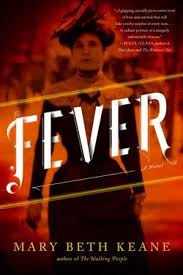
For my self-selected project I chose to work with Marti and Hayley to form a book club to read two historical fiction novels. We read When Hitler Stole Pink Rabbit by Judith Kerr and Fever by Mary Beth Keane.

When Hitler Stole Pink Rabbit is based on Kerr's experience escaping from Germany with her family and then living in France and finally England. For the most part we liked this book especially since it was based on a young girl's experiences which students could relate to. However, the book is fairly simple in a number of ways. The first being that it is written at about a 5th or 6th grade reading level taking it almost out of the realm of secondary education. The second being that the author idealized many of the situations that happened to her. We did find many uses for it, however, especially for ESL students or struggling readers. It also has many themes that could be used in both an English and History class. These themes include new places and identities, various perspectives, censorship, and the effect of war on art. We decided that this book would be a good jumping off point to study a variety of perspectives especially during and after the war since the book ends with the beginning of the war. We also thought it would be fun to do an activity where students write postcards based on the book or other historical events during the same time period since the main character's uncle wrote post cards.
Fever is based on the life of Mary Mallon aka. Typhoid Mary. She was a cook during the late 19th and early 20th century and saw a lot of death during this time. A sanitary engineer, Dr. Soper, first developed the concept of healthy carriers, people who are not ill but spread disease, which he applied to Mary. This led to her capture and exile on North Brother Island for three years. We liked this book as well as it did a good job of humanizing the life of Mary Mallon as well as other events during the same time period such as the Triangle Shirtwaist Factory Fire. We decided that this would be a good book for cross-curricular activities in English, History, and Science. It would be interesting to have students research how the views of disease have changed over the years and to see how disease is viewed in the present day. We also decided it would be interesting to look at gender and what role it plays in society. In the book, a male healthy carrier was discovered but was not quarantined because he was the head of the household. Other interesting themes in the book is immigration and how they were viewed in society as well as the reality of city life. To build upon this book we decided it would be good to read Mary's accounts along with other primary source documents to enrich the view point presented in the book.
We decided that to encourage reading for pleasure we would include both of these books, along with others, in our own classroom libraries. These books taught me that reading for pleasure in history can be both fun and informative. I learned a lot about Typhoid Mary and the conditions people lived in during the turn of the century. It can also play to students' interests which can help them engage in both an English and history classroom.
Along with a classroom library I would incorporate book clubs or book reviews into my classroom. Students would be assigned to find a historical fiction book that interests them which would either be read as a group or individually. Students would then discuss their book with a group or write a book review. This book review would summarize the book and discuss what the student like or disliked along with their recommendation. It would be fun to create a top ten list of books to read.
When Hitler Stole Pink Rabbit is based on Kerr's experience escaping from Germany with her family and then living in France and finally England. For the most part we liked this book especially since it was based on a young girl's experiences which students could relate to. However, the book is fairly simple in a number of ways. The first being that it is written at about a 5th or 6th grade reading level taking it almost out of the realm of secondary education. The second being that the author idealized many of the situations that happened to her. We did find many uses for it, however, especially for ESL students or struggling readers. It also has many themes that could be used in both an English and History class. These themes include new places and identities, various perspectives, censorship, and the effect of war on art. We decided that this book would be a good jumping off point to study a variety of perspectives especially during and after the war since the book ends with the beginning of the war. We also thought it would be fun to do an activity where students write postcards based on the book or other historical events during the same time period since the main character's uncle wrote post cards.
Fever is based on the life of Mary Mallon aka. Typhoid Mary. She was a cook during the late 19th and early 20th century and saw a lot of death during this time. A sanitary engineer, Dr. Soper, first developed the concept of healthy carriers, people who are not ill but spread disease, which he applied to Mary. This led to her capture and exile on North Brother Island for three years. We liked this book as well as it did a good job of humanizing the life of Mary Mallon as well as other events during the same time period such as the Triangle Shirtwaist Factory Fire. We decided that this would be a good book for cross-curricular activities in English, History, and Science. It would be interesting to have students research how the views of disease have changed over the years and to see how disease is viewed in the present day. We also decided it would be interesting to look at gender and what role it plays in society. In the book, a male healthy carrier was discovered but was not quarantined because he was the head of the household. Other interesting themes in the book is immigration and how they were viewed in society as well as the reality of city life. To build upon this book we decided it would be good to read Mary's accounts along with other primary source documents to enrich the view point presented in the book.
We decided that to encourage reading for pleasure we would include both of these books, along with others, in our own classroom libraries. These books taught me that reading for pleasure in history can be both fun and informative. I learned a lot about Typhoid Mary and the conditions people lived in during the turn of the century. It can also play to students' interests which can help them engage in both an English and history classroom.
Along with a classroom library I would incorporate book clubs or book reviews into my classroom. Students would be assigned to find a historical fiction book that interests them which would either be read as a group or individually. Students would then discuss their book with a group or write a book review. This book review would summarize the book and discuss what the student like or disliked along with their recommendation. It would be fun to create a top ten list of books to read.
Subscribe to:
Posts (Atom)